Morton Feldman
Listen to, buy or share
Buy
-
673,673
scrobbles
-
71,023 listeners
-
GustynGhiraf is listening to
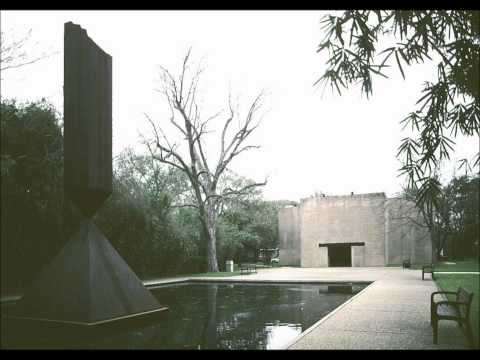
Morton Feldman – Rohtko Chapel 1
Tags
Biography
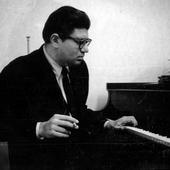
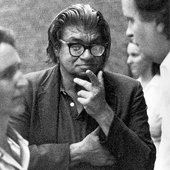
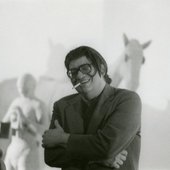
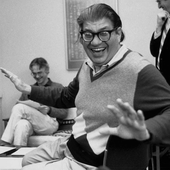
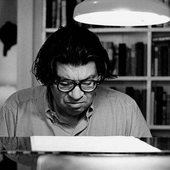
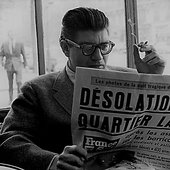
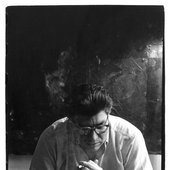
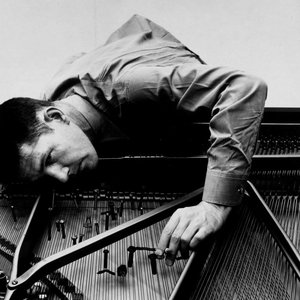
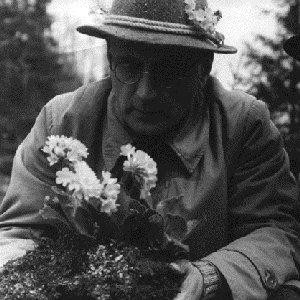
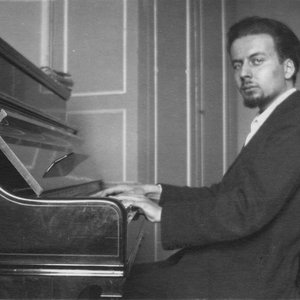
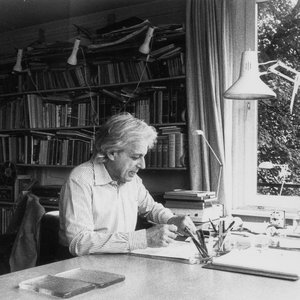
Morton Feldman (born January 12, 1926, died September 3, 1987) was an American composer. He is best known for his instrumental pieces which are frequently written for unusual groups of instruments, feature isolated, carefully chosen, predominantly quiet sounds, and are often very long.
Feldman was born in New York City. He studied piano with Madame Maurina-Press, a pupil of Ferruccio Busoni, and later composition with Wallingford Riegger and Stefan Wolpe. He did not agree with many of the views of these composition teachers, and he spent much of his time simply arguing with them. Feldman was composing at this time, but in a style very different from that with which he would later be associated.
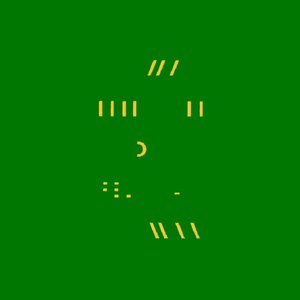
In 1950, Feldman went to hear the New York Philharmonic give a performance of Anton Webern’s Symphony. At the concert, he met John Cage, and the two became good friends. Under Cage’s influence, Feldman began to write pieces which had no relation to compositional systems of the past, such as the constraints of traditional harmony or the serial technique. He experimented with non-standard systems of musical notation, often using grids in his scores, and specifying how many notes should be played at a certain time, but not which ones. Feldman’s experiments with the use of chance in his composition in turn inspired John Cage to write pieces like the Music of Changes, where the notes to be played are determined by consulting the I Ching. aleatoric music and indeterminate music.]
Feldman was born in New York City. He studied piano with Madame Maurina-Press, a pupil of Ferruccio Busoni, and later composition with Wallingford Riegger and Stefan Wolpe. He did not agree with many of the views of these composition teachers, and he spent much of his time simply arguing with them. Feldman was composing at this time, but in a style very different from that with which he would later be associated.
In 1950, Feldman went to hear the New York Philharmonic give a performance of Anton Webern’s Symphony. At the concert, he met John Cage, and the two became good friends. Under Cage’s influence, Feldman began to write pieces which had no relation to compositional systems of the past, such as the constraints of traditional harmony or the serial technique. He experimented with non-standard systems of musical notation, often using grids in his scores, and specifying how many notes should be played at a certain time, but not which ones. Feldman’s experiments with the use of chance in his composition in turn inspired John Cage to write pieces like the Music of Changes, where the notes to be played are determined by consulting the I Ching. aleatoric music and indeterminate music.]
Featured tracks
-
Something Wild
1:31 -
For Samuel Beckett
1:03
Featured tracks
Top Tracks
Top Albums
-
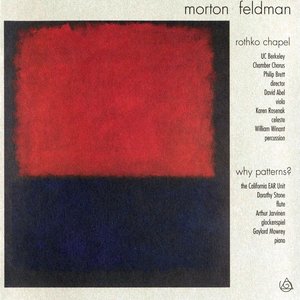
Rothko Chapel + Why Patterns?
41,949 listeners6 tracks
-
Something Wild
8,571 listeners1 track
-
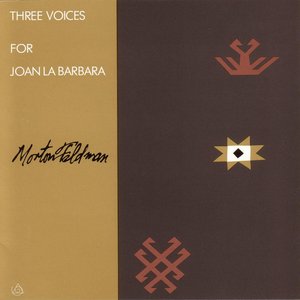
Three Voices For Joan La Barbara
16,304 listeners9 tracks
Released:
-
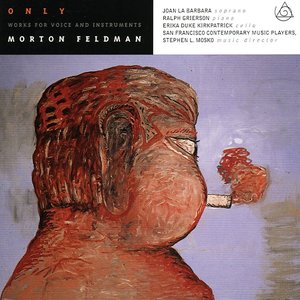
Only
13,399 listeners6 tracks
Released:
Events
-
What Would Thomas Bernhard Do - Day 6 (Ahonen / Feldman)Wednesday 22 May 2013Morton Feldman and 1 other
Listening Trend
71,023listeners all time
673,673scrobbles all time
Recent listeners trend:
Start scrobbling and track your listening history
Last.fm users scrobble the music they play in iTunes, Spotify, Rdio and over 200 other music players.
Create a Last.fm profile