Anton Webern
Listen to, buy or share
Buy
-
614,058
scrobbles
-
63,916 listeners
Tags
Biography
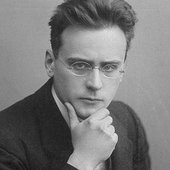
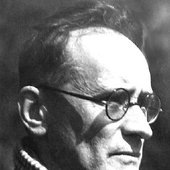
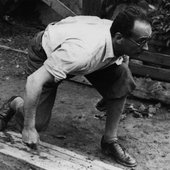
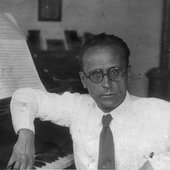
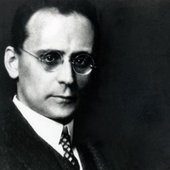
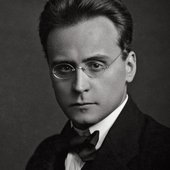
Anton Webern (3 December 1883 – 15 September 1945) was an Austrian composer and conductor. He was a member of the Second Viennese School. As a student and significant follower of Arnold Schoenberg, he became one of the best-known exponents of the twelve-tone technique; in addition, his innovations regarding schematic organization of pitch, rhythm and dynamics were formative in the musical technique later known as total serialism.
Webern was not a prolific composer; just thirty-one of his compositions were published in his lifetime, and when Pierre Boulez oversaw a project to record all of his compositions, including those without opus numbers, the results fit on just six CDs. However, his influence on later composers, and particularly on the post-war avant garde, was immense. His mature works, using Arnold Schoenberg’s twelve-tone technique, have a textural clarity and emotional coolness which greatly influenced composers such as Pierre Boulez, Luigi Nono, Karlheinz Stockhausen and Milton Babbitt.
Like almost every composer who had a career of any length, Webern’s music changed over time. However, it is typified by very spartan textures, in which every note can be clearly heard; carefully chosen timbres, often resulting in very detailed instructions to the performers and use of extended instrumental techniques (flutter tonguing, col legno, and so on); wide-ranging melodic lines, often with leaps greater than an octave; and brevity: the Six Bagatelles for string quartet (1913), for instance, last about three minutes in total.
Webern was not a prolific composer; just thirty-one of his compositions were published in his lifetime, and when Pierre Boulez oversaw a project to record all of his compositions, including those without opus numbers, the results fit on just six CDs. However, his influence on later composers, and particularly on the post-war avant garde, was immense. His mature works, using Arnold Schoenberg’s twelve-tone technique, have a textural clarity and emotional coolness which greatly influenced composers such as Pierre Boulez, Luigi Nono, Karlheinz Stockhausen and Milton Babbitt.
Like almost every composer who had a career of any length, Webern’s music changed over time. However, it is typified by very spartan textures, in which every note can be clearly heard; carefully chosen timbres, often resulting in very detailed instructions to the performers and use of extended instrumental techniques (flutter tonguing, col legno, and so on); wide-ranging melodic lines, often with leaps greater than an octave; and brevity: the Six Bagatelles for string quartet (1913), for instance, last about three minutes in total.
Top Tracks
Top Albums
Listening Trend
63,916listeners all time
614,058scrobbles all time
Recent listeners trend:
Start scrobbling and track your listening history
Last.fm users scrobble the music they play in iTunes, Spotify, Rdio and over 200 other music players.
Create a Last.fm profile


Get exclusive tour, release & promotion updates on Anton Webern from Universal Music.