György Ligeti
Listen to, buy or share
Buy
-
1,170,689
scrobbles
-
125,051 listeners
Tags
Biography
Romania (1923 – 2006)
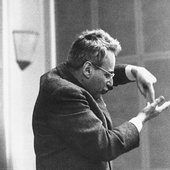
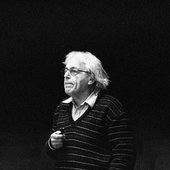
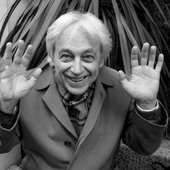
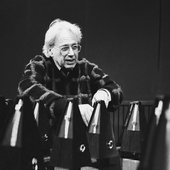
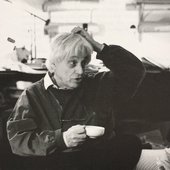
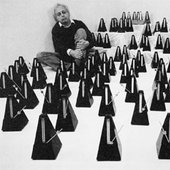
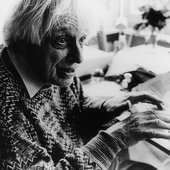
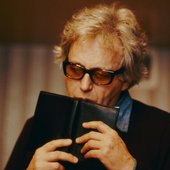
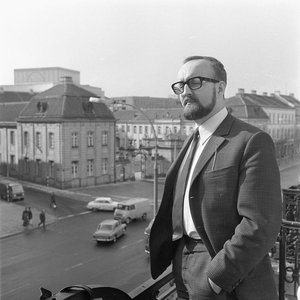
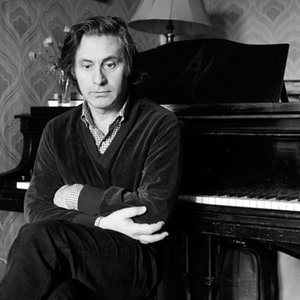
György Sándor Ligeti; (May 28, 1923 – June 12, 2006) was a Jewish Hungarian composer born in Romania who later became an Austrian citizen.
Ligeti received his initial musical training in the conservatory at Kolozsvár (Cluj, Transylvania, Romania). His education was interrupted in 1944 when, as a Jew, he was forced to labor by the Nazis. At the same time his parents, brother, and other relatives were deported to the Auschwitz concentration camp, his mother being the only survivor.
Following the war, Ligeti returned to his studies in Budapest, graduating in 1949. He studied under Pál Kadosa, Ferenc Farkas, Zoltán Kodály and Sándor Veress. He went on to do ethnomusicological work on Romanian folk music, but after a year returned to his old school in Budapest, this time as a teacher of harmony, counterpoint and musical analysis. However, communications between Hungary and the west had been cut off by the then communist government, and Ligeti had to secretly listen to radio broadcasts to keep abreast of musical developments. In December of 1956, two months after the Hungarian revolution was put down by the Soviet Army, he fled to Vienna and eventually took Austrian citizenship.
Before Ligeti emigrated to the West, his work was limited by political repression and censorship, which restricted access to new musical ideas and discouraged public presentation of experimental music.
Ligeti received his initial musical training in the conservatory at Kolozsvár (Cluj, Transylvania, Romania). His education was interrupted in 1944 when, as a Jew, he was forced to labor by the Nazis. At the same time his parents, brother, and other relatives were deported to the Auschwitz concentration camp, his mother being the only survivor.
Following the war, Ligeti returned to his studies in Budapest, graduating in 1949. He studied under Pál Kadosa, Ferenc Farkas, Zoltán Kodály and Sándor Veress. He went on to do ethnomusicological work on Romanian folk music, but after a year returned to his old school in Budapest, this time as a teacher of harmony, counterpoint and musical analysis. However, communications between Hungary and the west had been cut off by the then communist government, and Ligeti had to secretly listen to radio broadcasts to keep abreast of musical developments. In December of 1956, two months after the Hungarian revolution was put down by the Soviet Army, he fled to Vienna and eventually took Austrian citizenship.
Before Ligeti emigrated to the West, his work was limited by political repression and censorship, which restricted access to new musical ideas and discouraged public presentation of experimental music.
Top Tracks
Top Albums
-
LIGETI: Etudes, Books 1 and 2
56,105 listeners15 tracks
-
The Ligeti Project II (Berliner Philharmoniker feat. conductor Jonathan Nott)
28,560 listeners9 tracks
Released:
-
Ligeti Edition 6: Keyboard Works
26,421 listeners22 tracks
Released:
-
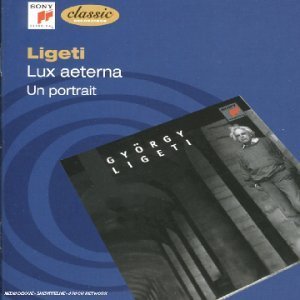
Un Portrait
5,530 listeners13 tracks
Released:
Events
-
ORF Radio-Symphonieorchester Wien / Marwood / RobertsonMonday 10 June 2013György Ligeti and 5 others
Listening Trend
125,051listeners all time
1,170,689scrobbles all time
Recent listeners trend:
Start scrobbling and track your listening history
Last.fm users scrobble the music they play in iTunes, Spotify, Rdio and over 200 other music players.
Create a Last.fm profile


Get exclusive tour, release & promotion updates on György Ligeti from Universal Music.