Witold Lutosławski
Listen to, buy or share
Buy
-
125,303
scrobbles
-
15,573 listeners
-
Chronologicque is listening to
Witold Lutosławski – Piano Concerto: I
Biography
Warsaw, Poland (1913 – 1994)
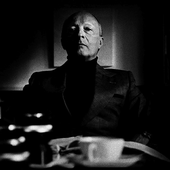
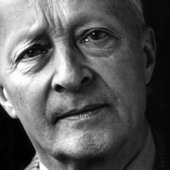
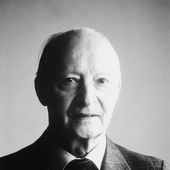
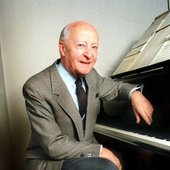
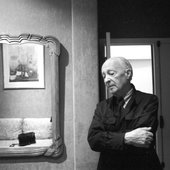
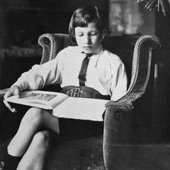
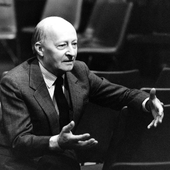
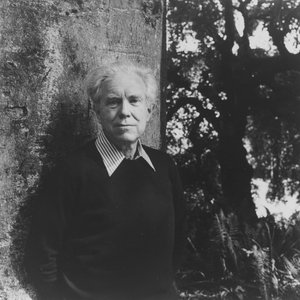
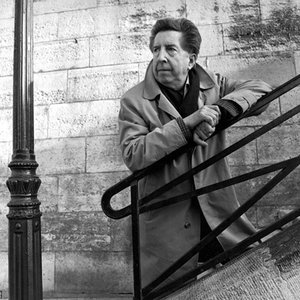
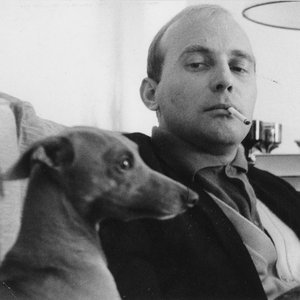
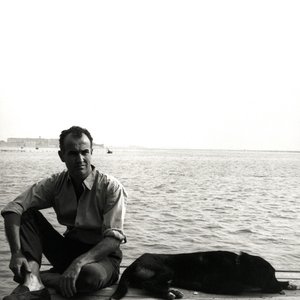
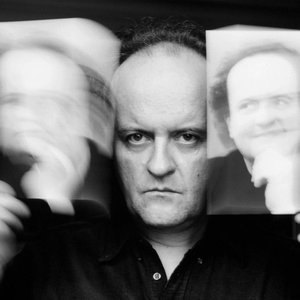
Witold Lutosławski (IPA: [vitɔlt lutɔswafski]; January 25, 1913, Warsaw, Poland – February 7, 1994, Warsaw) was one of the major European composers of the 20th century, and one of the pre-eminent Polish musicians during his last three decades. During his lifetime, he earned many international awards and prizes, including the Order of the White Eagle, Poland’s highest honour.
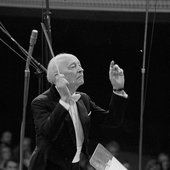
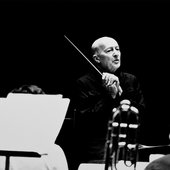
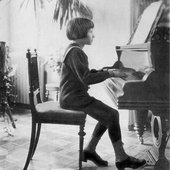
Lutosławski studied piano and composition in Warsaw. His early works—like the music of many 19th- and 20th-century composers—were influenced by Polish folk music. His style demonstrates a wide range of rich atmospheric textures. He began to develop his own characteristic composition techniques in the late 1950s. His music from this period onwards incorporates his own methods of building harmonies from a small group of musical intervals. It also uses aleatory processes, in which the rhythmic coordination of parts is subject to an element of chance. His works (of which he was a notable conductor) include four symphonies, a Concerto for Orchestra, and several concertos and song cycles.
During World War II, Lutosławski made a living by playing the piano in Warsaw bars. For a time after the war, Stalinist authorities banned his compositions for being “formalist”—accessible only to the perceived elite. In the 1980s, Lutosławski used his stature to support the Solidarity movement, which won the 1989 legislative election and broke the Soviet hold over Poland.
Lutosławski studied piano and composition in Warsaw. His early works—like the music of many 19th- and 20th-century composers—were influenced by Polish folk music. His style demonstrates a wide range of rich atmospheric textures. He began to develop his own characteristic composition techniques in the late 1950s. His music from this period onwards incorporates his own methods of building harmonies from a small group of musical intervals. It also uses aleatory processes, in which the rhythmic coordination of parts is subject to an element of chance. His works (of which he was a notable conductor) include four symphonies, a Concerto for Orchestra, and several concertos and song cycles.
During World War II, Lutosławski made a living by playing the piano in Warsaw bars. For a time after the war, Stalinist authorities banned his compositions for being “formalist”—accessible only to the perceived elite. In the 1980s, Lutosławski used his stature to support the Solidarity movement, which won the 1989 legislative election and broke the Soviet hold over Poland.
Top Tracks
Top Albums
-
Symphony No. 4 / Violin Partita / Chain II / Funeral Music (Polish National Radio…
958 listeners15 tracks
Released:
-
Orchestral Works Vol. 2 (Polish National Radio Symphony Orchestra, feat. conductor…
241 listeners11 tracks
Released:
-
Cello Concerto / Livre Pour Orchestre / Novelette / Chain III (Polish National radio…
191 listeners8 tracks
Released:
-
Lutoslawski Conducts Lutoslawski (Symphonie-Orchester des Bayerischen Rundfunks)
26 listeners9 tracks
Released:
Events
Add eventListening Trend
15,573listeners all time
125,303scrobbles all time
Recent listeners trend:
Start scrobbling and track your listening history
Last.fm users scrobble the music they play in iTunes, Spotify, Rdio and over 200 other music players.
Create a Last.fm profile