Paul Hindemith
Tags
Biography
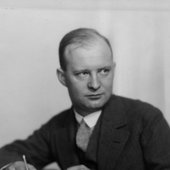
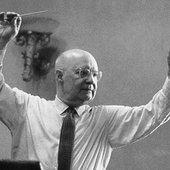
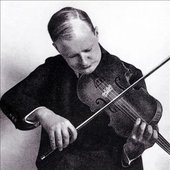
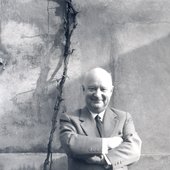
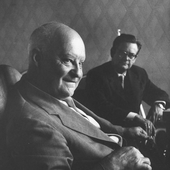
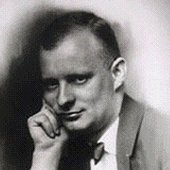
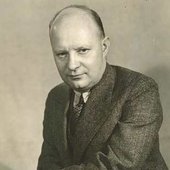
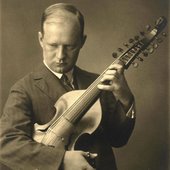
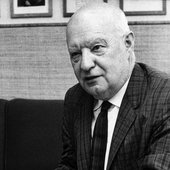
Born in Hanau in 1895, Paul Hindemith was taught the violin as a child. He entered the Hoch’sche Konservatorium in Frankfurt am Main where he studied conducting, composition and violin under Arnold Mendelssohn and Bernhard Sekles, supporting himself by playing in dance bands and musical-comedy outfits. He led the Frankfurt Opera orchestra from 1915 to 1923 and played in the Rebner string quartet in 1921 in which he played second violin, and later the viola. In 1929 he founded the Amar Quartet, playing viola, and extensively toured Europe.
In 1922, some of his pieces were heard in the International Society for Contemporary Music festival at Salzburg, which first brought him to the attention of an international audience. The following year, he began to work as an organizer of the Donaueschingen Festival, where he programmed works by several avant garde composers, including Anton Webern and Arnold Schoenberg. From 1927 he taught composition at the Berliner Hochschule für Musik in Berlin and in the 1930s he made several visits to Ankara where he led the task of reorganizing Turkish music education. Towards the end of the 1930s, he made several tours of America as a viola and viola d’amore soloist.
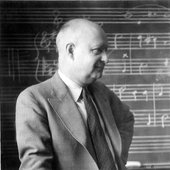
Despite protests from the conductor Wilhelm Furtwängler, his music was condemned as “degenerate” by the Nazis, and in 1940 he emigrated to the USA. At the same time that he was codifying his musical language, his teaching began to be affected by his theories. At this time he taught primarily at Yale University where he had such notable pupils as Lukas Foss, Norman Dello Joio, Harold Shapero, and Ruth Schonthal.
In 1922, some of his pieces were heard in the International Society for Contemporary Music festival at Salzburg, which first brought him to the attention of an international audience. The following year, he began to work as an organizer of the Donaueschingen Festival, where he programmed works by several avant garde composers, including Anton Webern and Arnold Schoenberg. From 1927 he taught composition at the Berliner Hochschule für Musik in Berlin and in the 1930s he made several visits to Ankara where he led the task of reorganizing Turkish music education. Towards the end of the 1930s, he made several tours of America as a viola and viola d’amore soloist.
Despite protests from the conductor Wilhelm Furtwängler, his music was condemned as “degenerate” by the Nazis, and in 1940 he emigrated to the USA. At the same time that he was codifying his musical language, his teaching began to be affected by his theories. At this time he taught primarily at Yale University where he had such notable pupils as Lukas Foss, Norman Dello Joio, Harold Shapero, and Ruth Schonthal.
Top Tracks
Top Albums
Events
Add eventListening Trend
51,435listeners all time
285,653scrobbles all time
Recent listeners trend:
Start scrobbling and track your listening history
Last.fm users scrobble the music they play in iTunes, Spotify, Rdio and over 200 other music players.
Create a Last.fm profile