Leoš Janáček
Listen to, buy or share
Buy
-
536,206
scrobbles
-
70,201 listeners
Tags
Biography
(1854 – 1928)
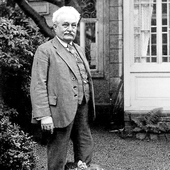
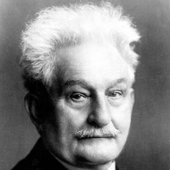
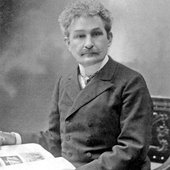
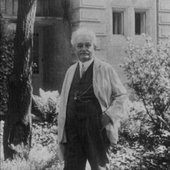
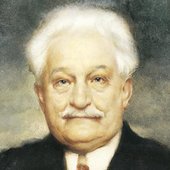
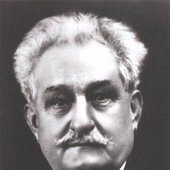
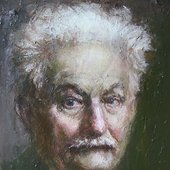
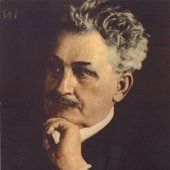
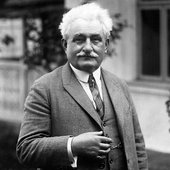
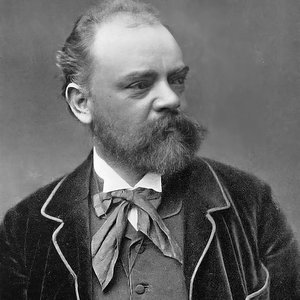
Leoš Janáček (3 July 1854 in Hukvaldy, Moravia – 12 August 1928 in Ostrava) was a Czech composer. He was inspired by Czech, Moravian and the broader field of Slavic folk music, weaving it into some of his greatest compositons: his Sinfonietta, Glagolitic Mass, Taras Bulba, string quartets and operas. Janáček is generally recognised as an inimitable composer, and one of his country’s foremost talents.
Janáček, the son of a schoolmaster, sang as a boy in the choir of the monastery in Brno. He later went to Prague to study music and made a living as a music teacher. He also conducted various amateur choirs. In 1881 he moved back to Brno, and founded the Organ School there, which was later to become the Brno Conservatory.
As a young man Janáček became friends with Antonín Dvořák, and began composing in a relatively traditional romantic style, but after his opera Šárka (1881), his style began to change. He made a study of Moravian and Slovak folk music and used elements of it in his own music. He especially focused on studying and reproducing the rhythm and the pitch contour and inflections of normal Czech speech, which helped in creating the very distinctive vocal melodies in his opera Jenůfa (1904). Going much farther than Modest Mussorgsky and anticipating the later work of Béla Bartók in such styles, this became a distinguishing feature of his vocal writing (Samson 1977).
Janáček, the son of a schoolmaster, sang as a boy in the choir of the monastery in Brno. He later went to Prague to study music and made a living as a music teacher. He also conducted various amateur choirs. In 1881 he moved back to Brno, and founded the Organ School there, which was later to become the Brno Conservatory.
As a young man Janáček became friends with Antonín Dvořák, and began composing in a relatively traditional romantic style, but after his opera Šárka (1881), his style began to change. He made a study of Moravian and Slovak folk music and used elements of it in his own music. He especially focused on studying and reproducing the rhythm and the pitch contour and inflections of normal Czech speech, which helped in creating the very distinctive vocal melodies in his opera Jenůfa (1904). Going much farther than Modest Mussorgsky and anticipating the later work of Béla Bartók in such styles, this became a distinguishing feature of his vocal writing (Samson 1977).
Top Tracks
Top Albums
-
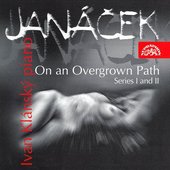
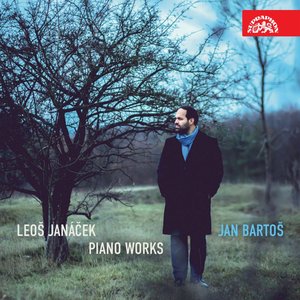
On an overgrown Path, In the mist, Piano sonata 1st October 1905 "From The Street",…
26,579 listeners22 tracks
-
Sinfonietta (Czech Philharmonic Orchestra, Karel Ančerl)
14,960 listeners5 tracks
-
Lachian Dances / Suite For Strings / Idyll For Strings (Brno State Philharmonic…
13,323 listeners19 tracks
-
String Quartets No.1 & 2 (Pavel Wallinger Quartet)
12,846 listeners8 tracks
Listening Trend
70,201listeners all time
536,206scrobbles all time
Recent listeners trend:
Start scrobbling and track your listening history
Last.fm users scrobble the music they play in iTunes, Spotify, Rdio and over 200 other music players.
Create a Last.fm profile