Carl Orff
Listen to, buy or share
Buy
-
3,101,055
scrobbles
-
349,846 listeners
-
ailensaavedra is listening to
Carl Orff – I Primo Vere - Ecce gratum
Biography
Carl Orff (10th July 1895–29th March 1982) was a German composer, most famous for his Carmina Burana (1937), and an important and influential music educator.
Orff was born in Munich and came from a Bavarian family that was very active in the German military. His father’s regimental band supposedly often played the compositions of the young Orff. He studied at the Munich Academy of Music until 1914, then served in the military during World War I. Afterwards he held various positions at opera houses in Mannheim and Darmstadt, later to return to Munich to further pursue his musical studies.
From 1925 Orff was the head of a department and co-founder of the Guenther School for gymnastics, music, and dance in Munich, where he worked with musical beginners. Having constant contact with children, this is where he developed his theories in music education.
While Orff’s association, or lack thereof, with the Nazi party has never been conclusively established, his Carmina Burana was hugely popular in Nazi Germany after its premiere in Frankfurt in 1937, receiving numerous performances (although one Nazi critic reviewed it savagely as “degenerate”, implying a connection with the contemporaneous, and infamous, exhibit of Entartete Kunst). He was one of the few German composers under the Nazi regime who responded to the official call to write new music for A Midsummer Night’s Dream, after the music of Felix Mendelssohn had been banned, which in itself suggests where his sympathies lay; others refused to cooperate in this.
Orff was born in Munich and came from a Bavarian family that was very active in the German military. His father’s regimental band supposedly often played the compositions of the young Orff. He studied at the Munich Academy of Music until 1914, then served in the military during World War I. Afterwards he held various positions at opera houses in Mannheim and Darmstadt, later to return to Munich to further pursue his musical studies.
From 1925 Orff was the head of a department and co-founder of the Guenther School for gymnastics, music, and dance in Munich, where he worked with musical beginners. Having constant contact with children, this is where he developed his theories in music education.
While Orff’s association, or lack thereof, with the Nazi party has never been conclusively established, his Carmina Burana was hugely popular in Nazi Germany after its premiere in Frankfurt in 1937, receiving numerous performances (although one Nazi critic reviewed it savagely as “degenerate”, implying a connection with the contemporaneous, and infamous, exhibit of Entartete Kunst). He was one of the few German composers under the Nazi regime who responded to the official call to write new music for A Midsummer Night’s Dream, after the music of Felix Mendelssohn had been banned, which in itself suggests where his sympathies lay; others refused to cooperate in this.
Top Tracks
Top Albums
-
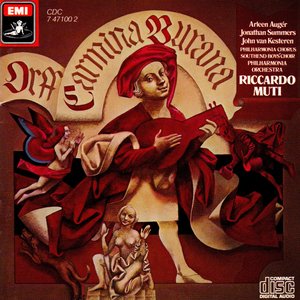
Carmina Burana
96,232 listeners25 tracks
Released:
-
Carmina Burana (Chicago Symphony Orchestra feat. conductor: James Levine)
141,510 listeners25 tracks
Released:
-
Orff: Carmina Burana
33,415 listeners25 tracks
Released:
-
Carmina Burana (Orchestra & Choir of the Sinfonica de Minería)
12,424 listeners25 tracks
Listening Trend
349,846listeners all time
3,101,055scrobbles all time
Recent listeners trend:
Start scrobbling and track your listening history
Last.fm users scrobble the music they play in iTunes, Spotify, Rdio and over 200 other music players.
Create a Last.fm profile